



Hyundai Elexio Five-Star ANCAP Safety Rating: What Bayside Buyers Need to Know
Buyer Guides & Vehicle Reviews | Hyundai Elexio
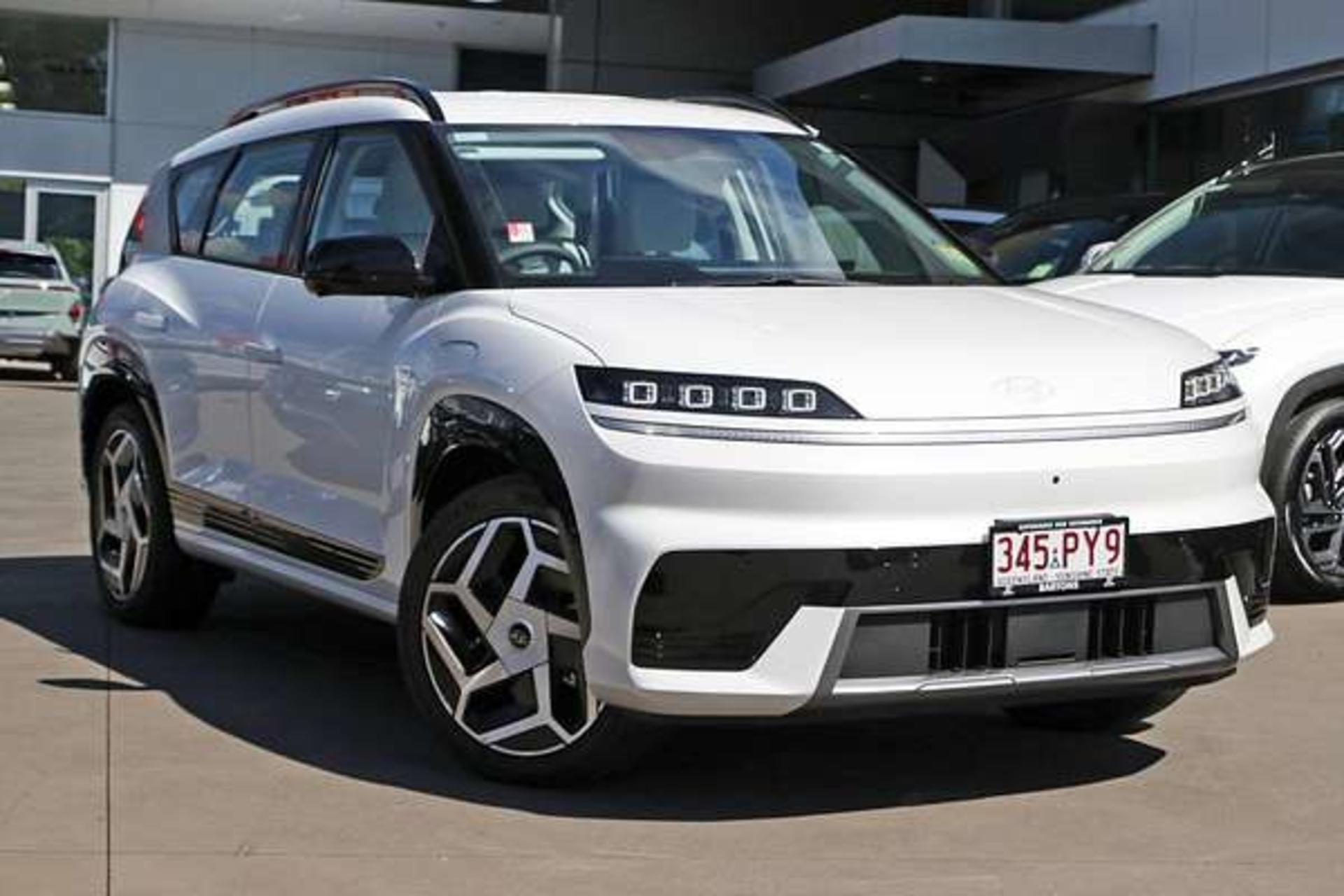
The Hyundai Elexio has earned a five-star ANCAP safety rating (the highest possible result) under the 2023-2025 assessment criteria. Introduced to Australia in February 2026, the Elexio is a battery-electric medium SUV. The rating was published in February 2026 and applies to all variants built from October 2025 onwards.
At Bartons Wynnum Hyundai, we provide the complete safety picture for every model we stock. The Elexio's scorecard shows strong Safety Assist at 85 per cent and a perfect rescue and extrication result, alongside a lower VRU score of 77 per cent driven by pedestrian physical impact limitations. Here is what each result means for Bayside buyers.
How This Rating Was Assessed
The ANCAP safety rating for the Hyundai Elexio is based on testing of the closely related Kia EV5, with ANCAP conducting additional active safety and pedestrian impact tests directly on the Hyundai Elexio. Hyundai provided technical information confirming the Kia EV5 results apply to the Elexio. The Elexio Elite RHD was directly tested as part of this process.
Australia only: This rating applies in Australia only. It does not cover New Zealand.
One variant currently rated: The rating applies to the Elexio Elite at publication. Confirm with our team whether the base Elexio variant has been rated.
What is an ANCAP Safety Rating?
ANCAP independently crash-tests and rates new vehicles sold in Australia and New Zealand. A five-star rating is the highest result achievable.
ANCAP assesses four key categories: Adult Occupant Protection, Child Occupant Protection, Vulnerable Road User Protection, and Safety Assist.
Hyundai Elexio ANCAP Safety Rating: The Full Scorecard
The Hyundai Elexio (OE1C series, built from October 2025) achieved the following results:
| Category | Score | Rating |
|---|---|---|
| Adult Occupant Protection | 35.47 / 40 | 88% |
| Child Occupant Protection | 42.41 / 49 | 86% |
| Vulnerable Road User Protection | 48.60 / 63 | 77% |
| Safety Assist | 15.42 / 18 | 85% |
The rating applies to Australian-market variants built from October 2025 onwards. It expires December 2031.
Adult Occupant Protection: 88% (35.47 out of 40)
In the frontal offset test, the driver received adequate chest and lower leg protection. Upper leg protection was rated marginal for both the driver and front passenger. Dashboard structures were identified as a potential source of injury for both occupants. Three deductions were applied to the driver: variable contact, concentrated load, and a footwell rupture(a small opening found in the seam between panels in the footwell after the test, penalised under ANCAP's protocol). Two deductions were applied to the passenger. The compatibility penalty was 1.00 point.
In the full-width frontal test, the driver received good results throughout. Rear passenger chest protection was adequate(2.91 out of 4). Hyundai confirmed the Elexio's chest deflection is slightly higher than the tested Kia EV5 but within five-star requirements.
The side impact scored the maximum 6.00 out of 6 points with good protection across all body regions. For Bayside families navigating the intersections around Wynnum Central, Manly Road, and the Capalaba access routes, a maximum side impact score is directly relevant to everyday driving. The oblique pole returned 5.36 out of 6, with driver chest marginal and a penalty applied for the centre airbag not fully preventing occupant-to-occupant head contact.
The far-side impact scored 3.00 out of 4. The rescue and extrication score was the full 4.00 out of 4 points. Both doors and windows passed submergence testing, multi-collision braking is fitted, and the rescue sheet is available. No eCall system is fitted (2.00 default points).
Child Occupant Protection: 86% (42.41 out of 49)
The frontal offset child test returned the maximum 16.00 out of 16 points with good protection across all critical body regions of both dummies. The side impact scored 7.79 out of 8, with the head of the ten-year-old dummy rated adequateand good results for all other body areas of both dummies.
ISOFix lower anchorages are fitted to both rear outboard seats, with top tether anchorages across all rear positions. Most child restraint types can be installed in most rear positions. One installation note for Bayside families: the Type A capsule could not be correctly installed in the rear outboard seats using the vehicle seatbelt. Our team at Bartons Wynnum Hyundai can help you confirm the correct installation approach.
No child presence detection system is available.
Vulnerable Road User Protection: 77% (48.60 out of 63)
The bonnet and windscreen provided mostly adequate head protection to pedestrians, with weak and poor results at the stiff windscreen pillars, the rear of the bonnet, the base of the windscreen, and the front edge of the bonnet. Pelvis protection was mixed, ranging from good to poor (1.23 out of 4.5), the primary factor in the 77 per cent result. Femur protection was near-maximum and lower leg protection was good, with maximum knee and tibia points awarded.
Forward pedestrian AEB (Hyundai SmartSense FCA, 5-85 km/h) was rated good including in turning scenarios. Whether navigating the school zones near Wynnum State School, sharing the road with cyclists along the Bayside Coastal Pathway, or moving through the Manly foreshore car parks, the forward AEB covers the scenarios Bayside drivers face daily. AEB Backover was rated marginal (1.00 out of 2), providing some reverse protection but not reliably. Cyclist AEB was good (7.59 out of 9), with both information and warning alerts for approaching cyclists passing the assessment. Motorcyclist AEB was good (5.67 out of 6) and lane support in car-to-motorcyclist scenarios was good (2.50 out of 3), useful for Gateway Motorway commutes.
Safety Assist: 85% (15.42 out of 18)
Safety Assist is the Elexio's strongest category.
Car-to-car AEB (5-130 km/h) was near-perfect at 3.97 out of 4. AEB Junction and Crossing were both good (3.61 out of 4 combined), relevant to the intersection-heavy road network around Wynnum, Manly, and Capalaba. AEB Head-On is fitted as standard, however it was not assessed in this rating (0.00 out of 1); this reflects the testing scope, not a system failure.
The lane support system (55-210 km/h) had a notable split result. ELK was rated good in the most critical emergency lane keeping scenarios. However, LKA was rated poor in standard lane keep assist scenarios. The combined lane support score was 2.50 out of 3.
iACC is standard alongside camera and map-based speed sign recognition and an intelligent speed limiter. A direct driver monitoring system detecting distraction and fatigue, with the ability to adjust vehicle sensitivity, scored 1.65 out of 2. Seat belt reminders with occupancy detection for all positions scored the full 1.00 out of 1.
Safety Features: What Comes Standard
- Dual frontal, side chest, side head curtain, and centre airbags (oblique pole penalty applied)
- Driver and front passenger knee airbags
- AEB: car-to-car (5-130 km/h), pedestrian forward and reverse, cyclist, and motorcyclist (Hyundai SmartSense FCA)
- AEB Junction and Crossing (both good); AEB Head-On (fitted; not assessed)
- Lane keep assist (poor) and emergency lane keeping (good), 55-210 km/h
- Blind spot monitoring with braking intervention
- iACC, camera and map-based speed sign recognition, intelligent speed limiter, manual speed limiter
- Direct driver monitoring system (distraction and fatigue with vehicle sensitivity adjustment)
- Cyclist dooring information and warning (both pass)
- Seat belt reminders with occupancy detection (all positions)
- Multi-collision braking
- ISOFix and top tether anchorages
Not available: eCall, child presence detection.
Test Drive the Five-Star Hyundai Elexio at Barton's Wynnum Hyundai
At Barton's Wynnum Hyundai, we think Bayside buyers deserve honest, complete safety information. The Elexio's five-star result reflects genuine Safety Assist strengths alongside transparent findings in adult occupant frontal protection and VRU physical impact performance. Our team is happy to walk through any of it.
Come in and see us at Bartons Wynnum Hyundai in Wynnum, take the Elexio for a test drive, and let our team help you. Visit BartonWynnumHyundai.com.au to browse current stock or book a test drive online.
Hyundai Elexio For Sale in Wynnum
All safety scores, test results, and feature listings are drawn from the official ANCAP assessment report for the Hyundai Elexio (February 2026 onwards), published February 2026. Rating is based on testing of the Kia EV5, with additional direct testing of the Hyundai Elexio. Applies to Australian-market variants only, built from October 2025 onwards. Source: ancap.com.au.